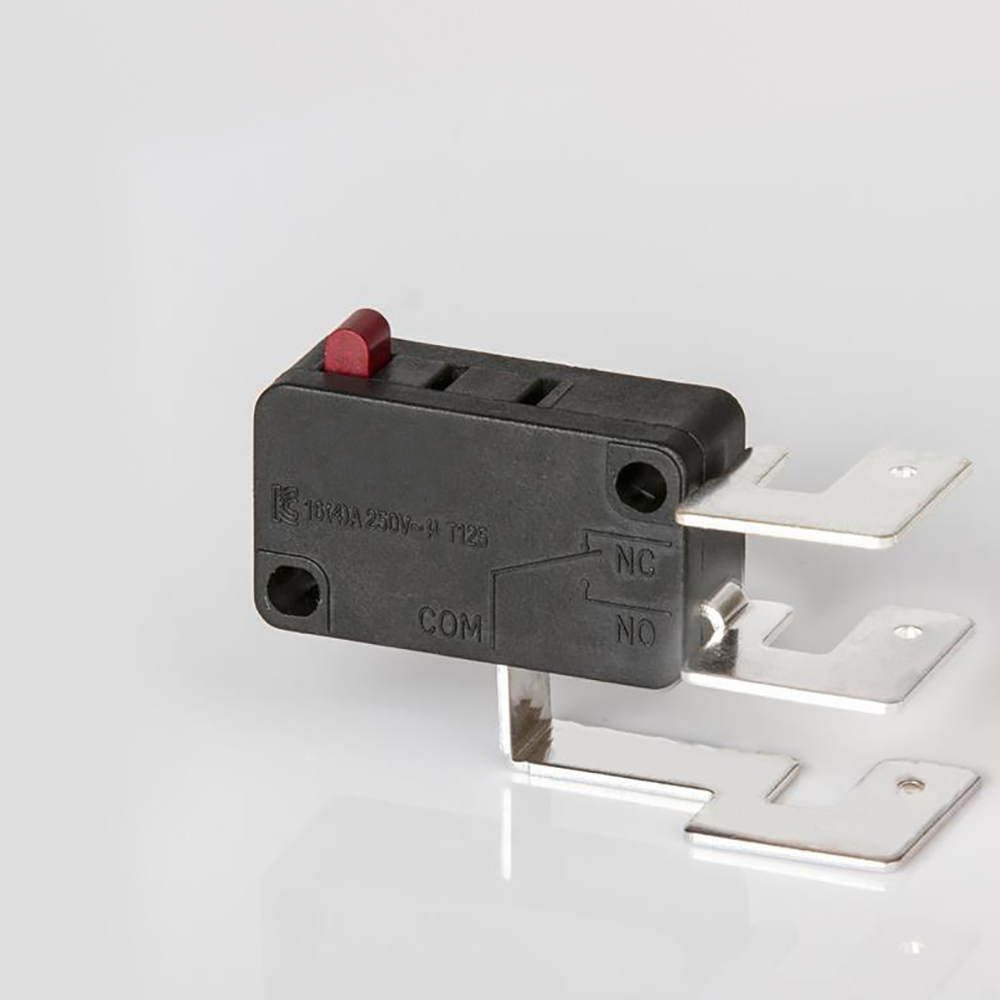
1. Functions of Electric Tool SwitchesThe switch of an electric tool is a critical component in tool operation. It not only controls the power on/off function but also directly affects operational safety and convenience. The design and performance of the switch are closely related to the overall user experience. A well-designed switch provides better tactile feedback and responsiveness. In addition, the response speed and stability of the switch influence operational accuracy, especially in complex working environments where operators have higher requirements for reliable switching and restart performance.2. Impact of Switches on Battery PerformanceThere is a very close relationship between electric tool switches and batteries. The switch must be designed to withstand specific current and voltage levels while ensuring that frequent on/off operations do not impose excessive stress on the battery. In battery-powered tools, the switching frequency directly affects battery endurance and performance. For example, a properly designed switch can effectively reduce inrush current during startup, minimizing sudden current surges and reducing battery load, thereby extending battery service life.The contact quality and stability of the switch also influence battery discharge efficiency, which in turn affects the overall performance of the tool.3. Future Development TrendsWith continuous advancements in electric tool technology, the relationship between switches and batteries is also evolving. In the future, automation and integration of switch functions will become a major trend. For instance, intelligent switches integrated with battery status monitoring can provide real-time feedback on battery usage, enabling operators to better manage tool operation and battery charging. Meanwhile, more efficient switch designs will help reduce power losses and improve overall battery efficiency. These innovations will further drive the development of electric tools, enhancing both work efficiency and user safety.
Importance of Mechanical DesignThe mechanical design of a micro switch is a key factor that determines its performance and durability. A micro switch typically consists of multiple components, including springs, contacts, and a housing. The materials and structural design of these components directly affect the operating feel and reliability of the switch. During the design process, the selection of appropriate materials is particularly critical, especially in applications involving high loads and high switching frequencies, where material rigidity and elasticity must withstand long-term mechanical fatigue. To ensure stability and safety under extreme conditions, engineers commonly select materials with high resistance to temperature, voltage, and corrosion.The structural design of a micro switch should also take into account the fit and coordination between individual components. Proper clearances and connection methods can reduce wear and help maintain stable electrical performance over long-term operation. Through design optimization, micro switches can achieve smaller size and lighter weight without compromising functionality, thereby meeting modern equipment requirements for miniaturization and high reliability.Methods for Durability AnalysisDurability analysis of micro switches typically involves a range of tests and evaluations. Static and dynamic fatigue tests are conducted to assess the mechanical performance of the switch during long-term use. These tests simulate real operating conditions to evaluate stability and consistency under frequent actuation. The results help design teams identify potential design weaknesses at an early stage and implement necessary improvements.Environmental testing is also a crucial part of durability analysis. Such tests include simulations of extreme conditions such as high and low temperatures, humidity, and dust exposure, aiming to evaluate the operational performance and service life of micro switches under adverse environments. This approach ensures that micro switches maintain efficient and reliable operation across various application scenarios and meet user expectations for product stability.Comprehensive Consideration from Design to ReliabilityThe mechanical design and durability analysis of micro switches is not an isolated task but a comprehensive, multidisciplinary process. During the design phase, factors such as materials, structure, and operating environment must be considered holistically to ensure overall switch performance. Achieving long service life requires thorough analysis at an early stage to minimize the need for frequent maintenance and replacement, thereby enhancing end-user satisfaction.In this process, rapid product development and a well-established quality control system are also indispensable. They ensure that the designed micro switches deliver consistent quality and performance once released to the market. The success of a micro switch relies not only on innovative engineering design but also on rigorously validated reliability testing, enabling it to maintain outstanding performance amid evolving market demands.
Basic Concepts of Cable ConnectionsThe cable connection method of an electric tool switch is of vital importance, as it directly affects the safety and performance of the tool. Cable connections serve not only as the bridge between the power supply and the tool, but also as the pathway for electrical signal transmission. Selecting an appropriate cable connection method ensures stable current flow while effectively preventing equipment failures and potential safety hazards for users. Specifically, cable connections should provide good electrical conductivity, insulation performance, and voltage resistance.Common Cable Connection MethodsThere are several main types of cable connection methods used in electric tools. The most common include threaded connections, plug-and-socket connections, and soldered connections.Threaded connections are simple and practical, making them suitable for applications that require frequent disassembly and secure fastening. Thread locking ensures a firm and reliable connection.Plug-and-socket connections are widely used in portable electric tools due to their convenience, allowing for easy plugging and unplugging and quick cable replacement by users.Soldered connections are typically used for fixed cables. While they provide strong and stable connections, they are not convenient for disassembly and are generally applied in situations where long-term connection stability is required.Selection and Application of Connection MethodsWhen selecting a cable connection method for an electric tool switch, factors such as the operating environment, the need for frequent disassembly, and electrical performance requirements should be taken into consideration. The cable type and connection method should be chosen based on the specific application scenario, such as construction sites or workshops. During installation, proper insulation treatment of the connections is essential to ensure safe operation and to prevent risks such as short circuits or electrical leakage. A clear understanding of basic cable connection concepts and common connection methods provides reliable assurance for the safe and stable operation of electric tools.
Under the long-term suppression of the COVID-19 pandemic, offline services have been significantly impacted, while the online digital industry has embraced development opportunities. Among them, the innovation, competition, and market prospects of digital technology are at an unprecedented level. Among many digital technologies, the "metaverse" stands out for its ability to attract investment.According to McKinsey's latest report, "Value Creation in the Virtual World," global interest in the metaverse's vertical sectors surged in 2022, with Web3 investment news and new NFT product lines being launched almost every week. By early July, over $120 billion had been invested in the metaverse, more than twice the $57 billion investment in 2021.This article will explore how the semiconductor industry can leverage the "metaverse" as a double-edged sword, focusing on technological innovation, industrial development, and application expansion.Is the end of AI AIoT, and the end of the internet the metaverse? The concept of the metaverse first appeared in 1992 in Neal Stephenson’s science fiction novel Snow Crash. The novel describes a virtual digital world "Metaverse" parallel to the real world, where people use VR devices to create avatars and live in the virtual world. This concept became popular in later novels and films.Even today, the metaverse lacks a unified and clear definition, but there are common elements that help understand this popular concept.The most widely accepted is Roblox’s "8 Essential Elements of the Metaverse": Identity, Friends, Immersion, Low Latency, Diversity, Ubiquity, Economic System, and Civilization. Roblox, the world’s largest multiplayer online creation platform, went public in the US on March 11, 2021, and is considered the "first stock of the metaverse."Facebook founder Mark Zuckerberg likens the metaverse to an internet that humans can “immerse themselves in” rather than just “watch and use” (UGC ecosystem), not just the next generation of the internet but the ultimate one. On October 28, 2021, Facebook changed its name to Meta, fully investing in the metaverse and sparking the "metaverse boom" among major tech giants, becoming the catalyst for the metaverse economy’s explosion.In the "2022 China Metaverse White Paper," the metaverse is defined as a digital world created by people using computers, parallel to the real world. It refines the "four core features of the metaverse" (Figure 1): Immersive experience, Virtual identity, Virtual economy, and Virtual social governance. This report, released in May 2022, is the most authoritative and comprehensive metaverse report in China.Although there are many valuable viewpoints in the global debate, it can be summarized that the future of the metaverse should encompass keywords like "virtual and real integration, immersive experience, ecological closed loop, natural interaction, parallel execution, and the Internet of Everything."Another hot topic is whether the metaverse is the future of the internet. The radicals believe that the metaverse is the next generation of mobile computing platforms (such as VR/AR/XR devices) that will create an entirely new internet ecosystem, with 5 billion users expected by 2030. Gradualists argue that the metaverse is not the next generation of the internet; it is a new application that will emerge once technology reaches a certain level and will be the largest application scenario in the third generation of the internet, following the PC and mobile internet.Interestingly, different countries and regions have different attitudes toward the metaverse, divided into radical and cautious factions. Countries like South Korea, Japan, and India are in the radical camp, while the U.S., Europe, and China are more cautious or wait-and-see.Attitudes Toward the Metaverse's Prospects in Different Countries The South Korean government reacted quickly to the metaverse, setting up a metaverse association and aiming to take a leading role in the industry. According to the five-year "Metaverse Seoul Basic Plan," the metaverse platform "Metaverse Seoul" is expected to be completed by the end of 2022.Japan aims to foster metaverse-related industries and build new national advantages. The Ministry of Economy, Trade, and Industry published a report in July 2021 defining the metaverse as "a virtual space where producers from various fields provide services and content to consumers."India is one of the top countries in the world for metaverse investment, with major tech companies like Reliance Industries, which launched "Jio Glass" for students and teachers to access 3D virtual classrooms.In contrast, developed countries like the U.S. remain cautious. The U.S. government has not yet released an official metaverse policy, with concerns over data security and monopolistic risks taking precedence. Europe is also highly cautious, with the EU focusing on regulations to gain a first-mover advantage in governance.China, on the other hand, has been more lenient with new technologies and is allowing space for the metaverse to grow. Currently, there is no official metaverse policy, although articles, such as one from the Central Commission for Discipline Inspection in December 2021, view the metaverse as a combination and upgrade of existing technologies, likening it to a "3D version of the internet."Strategies of Major Tech Companies Under varying national attitudes, global tech companies also show similar and divergent approaches toward the metaverse.The commonality is that tech giants are primarily focused on expanding capabilities in VR/AR hardware, 3D game engines, and content creation platforms. While the specific choices vary, the sub-sectors are quite similar with no major new applications emerging yet. The differences arise from the companies’ stances on the metaverse, with "radical" and "gradual" factions."Radical" companies include Roblox, Meta, Microsoft, Google, Nvidia, Baidu, NetEase, etc. These companies, mostly large American enterprises, are investing heavily in the metaverse, with some already launching metaverse-related products.For example, NetEase unveiled its next-gen internet technology architecture for the metaverse in December 2021, releasing its virtual human SDK "Youling" and immersive event system "Yaotai," showcasing their metaverse muscles. Similarly, Baidu launched "Xirang," an immersive virtual space parallel to the physical world, as part of its metaverse project initiated in December 2020."Gradual" companies like Tencent, ByteDance, and Alibaba have not officially announced major metaverse layouts but are quietly making moves in metaverse sub-sectors.Currently, Tencent is focusing on three main areas: underlying infrastructure, backend architecture, and content & scenarios. It is investing in Epic Games and Snap to establish a strong position in the VR/AR ecosystem. Alibaba has invested heavily in Sandbox and established a metaverse lab within Alibaba DAMO Academy to explore four layers of the metaverse: holographic construction, 3D simulation, virtual-real integration, and linking the virtual with the real. ByteDance, the parent company of TikTok, has also entered the metaverse through acquisitions, including purchasing VR headset maker Pico for 9 billion yuan.Analyzing the Metaverse Industry Chain From a technological evolution perspective, the metaverse needs to go through three development stages: Digital Twin, Digital Native, and Virtual-Real Symbiosis. Currently, it is still in its early stage, with VR and AR devices serving as initial mediums. Accelerating the speed of metaverse technology development requires the collective strength of the entire industry chain.The metaverse industry chain has already gathered a wide range of upstream, midstream, and downstream companies.Upstream: Core Technologies Core technologies include hardware components, foundational software, and network technologies. Hardware component industries such as core chips, optical devices, displays, and sensors will directly affect the autonomy of domestic terminal industries. For example, GPUs, MCUs, and sensors must improve performance to meet the algorithm requirements of the metaverse.Midstream: Platform Technologies The metaverse requires platform technology companies that provide essential services to the application ecosystem. These companies are categorized into three main areas: digital twins, creative tools, and IT support platforms.Downstream: Products and Ecosystem The downstream sector of the metaverse industry is diverse, including XR devices, interactive technologies, and simulation. These products, along with games, social media, advertising, and other sectors, will drive the metaverse forward.Chinese Semiconductor Companies' Involvement in the Metaverse Chinese semiconductor companies are playing a key role in the metaverse’s development, as evidenced by the "2022 Hurun China Metaverse Potential Companies List." Of the 220 companies on the list, 36 (16%) are semiconductor-focused, second only to software and data services (17%) and media & entertainment (17%).The AR/VR chip sector, which is essential for the metaverse, includes companies like MediaTek, Airoha Electronics, Beijing Junzheng, Rockchip, Allwinner Technology, and Chipone Technology, showing that Chinese semiconductor firms are making strides in the AR/VR applications that power the metaverse.The optical, display, and interaction technologies—key components for metaverse devices—are also being developed by prominent Chinese companies like Leyard, OFILM, Sunny Optical, and BOE. These companies are focused on providing a complete set of solutions to drive the rapid development of metaverse applications.Lastly, in the semiconductor and electronic component sectors, companies are deeply developing specific chip technologies and expanding product lines to provide solutions for the innovation and application of metaverse products.

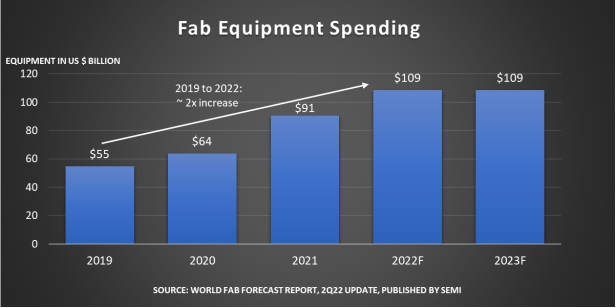
Currently, some of the downstream market demands are reaching saturation, but the overall trend is still quite positive.On a higher level, SEMI, in its latest World Fab Forecast report, provides data showing that the investment in front-end manufacturing equipment for fabs is expected to reach $109 billion in 2022, setting a new historical record and the first time surpassing $100 billion. The year-on-year growth for 2022 is 20%, which, although slightly lower than the 42% increase in 2021, still suggests that 2022 will mark three consecutive years of rapid growth.SEMI President and CEO Ajit Manocha stated, "This record-breaking investment underscores the unprecedented and sustained growth in the industry," highlighting the significance of the $109 billion forecast. By examining data from SEMI, Gartner, and Counterpoint Research, we can better understand the current state of the semiconductor manufacturing (including foundries) market, which is helpful for predicting the future direction of the industry.Manufacturing equipment investments continue to rise, with Taiwan leading Focusing on semiconductor manufacturing equipment, SEMI’s report mentions that global fab equipment facilities will expand by 8% this year, compared to a 7% growth rate last year. SEMI expects the fab equipment market capacity to continue growing in 2023, with a projected growth of about 6%.The last time an 8% year-over-year increase occurred was in 2010, when wafer monthly capacity reached 16 million units (equivalent to 200mm wafers). It is expected that by 2023, this figure will rise to 29 million wafers per month. In 2022, 85% of the spending on semiconductor manufacturing equipment will come from the capacity expansion of 158 fab plants and production lines.Regionally, Taiwan will remain the largest spender on fab manufacturing equipment, with an investment of $34 billion, a 52% year-on-year growth. Following Taiwan is South Korea, with a 7% increase, totaling $25.5 billion. Mainland China, ranking third, is expected to see a 14% decline in fab equipment investment, totaling $17 billion, which is largely due to a significant drop following last year’s high growth.Meanwhile, investments in Europe and the Middle East will reach a record $9.3 billion, an increase of 176%. The Americas are projected to see 13% and 19% growth in fab equipment investment for 2022 and 2023, respectively, reaching around $9.3 billion in 2023. SEMI forecasts favorable growth in Taiwan, South Korea, and Southeast Asia in 2023.Top 10 Foundries The investments in manufacturing equipment are predictable by region. In a recent semiconductor industry report by Gartner, the top 10 foundries in terms of revenue for 2021 were listed, though this doesn't cover the entire semiconductor manufacturing industry, it still provides a clear reflection of the current market status.The top 10 foundries by revenue included TSMC, Samsung, UMC, GlobalFoundries, SMIC, PSMC, Shanghai Huahong Grace, Vanguard International Semiconductor, Tower Semiconductor, and Shanghai Huahong. Taiwan, mainland China, and South Korea are clearly the dominant players.Even the slowest-growing foundry, Tower Semiconductor, saw a 19% revenue growth in 2021. Players like SMIC and GlobalFoundries saw revenue growth rates of over 35%. The fastest-growing companies were Samsung Foundry, PSMC, and Shanghai Huahong Grace, with growth rates of 66%, 74%, and 70%, respectively.Gartner noted that Samsung Foundry’s growth was driven by Qualcomm’s 5G chips, Nvidia GPUs, Google’s TPUs, and the strong demand from the mining industry for mining cards. PSMC’s growth was attributed to DDI chips and some of their specialty processes. Shanghai Huahong Grace’s strong growth was largely due to the capacity increase at their Wuxi facility. Gartner also highlighted SMIC’s capacity growth in 14nm processes, which became a key factor in their revenue increase.Despite these strong performances, no foundry is currently in a position to rival TSMC in terms of revenue. TSMC’s revenue in 2021 exceeded $50 billion, while none of the other top 9 foundries surpassed $10 billion. In total, the top 10 foundries’ combined revenue reached $100.2 billion, with an average growth rate of 31.3%, largely driven by TSMC.Counterpoint Research recently released Q1 2022 revenue share data for foundries. The overall situation is similar to last year. TSMC's Q1 2022 report highlighted its growth driven by HPC, including clients like Apple, AMD, Nvidia, and more. It also noted that HPC has now overtaken the smartphone sector to become TSMC’s most profitable application.Notably, the overall growth of foundries is closely tied to the rise in wafer average selling prices (ASP), which has been common in the current chip shortage environment. Many companies have seen significant performance growth during this period, with PSMC being one of the most representative examples.Price trends for different processes According to Counterpoint Research’s data, the process with the highest revenue share in Q1 2022 was the 7nm/6nm process, accounting for 18%. The main chips in this category include smartphone AP/SoC, tablet APUs, GPUs, and CPUs. The second-highest revenue came from 16/14/12nm processes (grouped together as they belong to the same process family), with major revenue from smartphone RF IC/4G SoC, wearable device processors, SSD controllers, and some PC-related ICs.Gartner recently reported on the revenue growth of different processes in 2021. The fastest-growing process was undoubtedly 5nm, with a 198% market value increase compared to 2020. This is the primary process for flagship smartphone AP/SoC chips, as well as applications like Apple’s Mac chips. According to Gartner’s data, 7nm currently holds the largest revenue share among all processes, with a 17% year-on-year growth rate starting in 2021.In 2021, processes like 28nm and 65nm saw relatively fast price increases, partly due to the large demand for MCU and other chips. For instance, 65nm process revenue grew by 48% in 2021 compared to 2020, revealing strong market demand.Revenue from different processes depends on the foundries' investment levels. Gartner believes that the 28nm process currently has significant investment and that its supply capacity will increase substantially in the next few years. SMIC, for example, is planning to build 28nm factories in Beijing, Shanghai, and Shenzhen. The trends for investments in various processes can help predict potential shortages or oversupply in the market.As a cyclical industry, semiconductor manufacturing often experiences various shifts between supply and demand, with growth and decline following cyclical patterns. Semiconductor manufacturing’s response to market conditions tends to be slower. Given that demand is approaching saturation for many chip types, observing the semiconductor manufacturing market in 2023-2024 will reveal a different landscape.
Undoubtedly, when it comes to electronic system design, most people focus on integrated circuits, while the accompanying passive components often go unnoticed. However, the value of passive components should not be underestimated.To ensure that the expected performance requirements are met at the time of delivery, and that the end equipment possesses all necessary functions, passive components integrated into electronic hardware play a crucial role. If a specific component—no matter how small or inexpensive it is—cannot be procured within an acceptable timeframe, it may have a significant impact on the production process of the OEM (Original Equipment Manufacturer). Existing orders may fail to be completed, ultimately missing potential opportunities.The past year and a half has been the most challenging period in the history of the global electronics supply chain. Production disruptions caused by the COVID-19 pandemic have exacerbated the already emerging component shortages.Even before the outbreak of COVID-19, the supply of multilayer ceramic capacitors (MLCC) was limited due to long lead times. Demand had been sluggish through the end of 2018 and early 2019, causing many manufacturers to significantly reduce MLCC production capacity. However, since then, market dynamics have revived demand for these components, which has now reached unprecedented heights.According to a report from Mordor Intelligence, the global MLCC market value reached $10.3 billion in 2020 and is projected to exceed $15 billion by 2026. During this period, the compound annual growth rate (CAGR) of MLCC will be 5.42%. Industries driving MLCC demand include 5G smartphones, electric vehicle (EV) powertrains, and renewable energy generation systems.Electric Vehicles and Applications In the coming years, the number of electric vehicles (EVs) on the roads will increase significantly, helping society reduce carbon emissions (related to climate change) and nitrogen oxide emissions (which harm human health). If predictions by the International Energy Agency (IEA) are correct, by 2030, the number of registered electric vehicles will exceed 145 million. With the widespread adoption of charging infrastructure, charging times for EV batteries will also shorten.At the same time, increasing the voltage of EV powertrains will help improve power, thereby extending the range of the vehicle on a single charge. Although these innovations will help increase the adoption of EVs, the high voltage required will place additional loads on related circuits, necessitating the use of more passive components. Currently, each electric vehicle requires over 10,000 MLCCs, underscoring the massive total demand for MLCCs in the market.5G Mobile Communications To achieve the higher data rates and greater data volumes promised by 5G networks, 5G communication will not only require more stable frequencies but will also use higher frequency bands, particularly in the millimeter-wave region of the radio frequency spectrum. As a result, there will be an increasing demand for higher-value capacitors and lower-loss magnetic components.Internet of Things Infrastructure In the coming years, billions of IoT nodes will be deployed to support industrial automation and smart city solutions. This will drive demand for supercapacitors, which can be used for energy harvesting—to store energy gathered from the surrounding environment by devices such as photovoltaic cells and thermoelectric generators (TEGs). This means that the need to replace batteries—an expensive and logistically challenging task—will be eliminated.Redefining the Passive Component Supply Chain Facing the current shortage of available stock, OEM manufacturers are under immense pressure. They need to find ways to alleviate the supply shortages and shorten lead times for related components. To achieve this, OEMs must work more closely with distributor partners.Looking ahead, the "just-in-time production" culture established in the past decade will no longer be applicable. Instead, engineering and procurement departments within OEMs need to be better prepared to avoid the risk of needing to redesign products due to insufficient components—and the potential financial losses resulting from this.If OEMs have a clearer understanding of mid- and long-term demand for passive components, they can plan more effectively in advance. Additionally, negotiating with their preferred distributors will allow them to stay informed of current industry trends and any potential demand hotspots that could negatively impact the supply of specific components.On the other hand, distributors must leverage their knowledge of the market and key applications to determine where demand may be most urgent. This way, they can ensure their component inventories meet customer needs. If a component is difficult to source, they must use their expertise to suggest potential alternatives.The electronics industry is constantly evolving, keeping up with the times and never standing still. Exciting new applications are emerging, requiring the selection of appropriate components to support these applications.Although most processes focus on high-end active components, the procurement issues surrounding passive components are often the most prominent. The recent shortage of MLCCs faced by OEMs only underscores this point. It also highlights the importance of establishing effective supply channels to address bottlenecks in the component supply chain.
As a peripheral industry of semiconductors, the display industry has been a focus of attention in recent years. For example, in the context of the global semiconductor shortage and the supply-demand imbalance, LCD panels have shown a roller-coaster-like price trend; miniLED is gradually rising, steadily lowering costs; and OLED's market share continues to increase...Recently, DSCC (Display Supply Chain) published a report on the top 10 predictions for the display industry in 2022. This article provides a simple summary and review of the white paper, combining other available information. It aims to help those interested in the display industry. For more detailed industry specifics, it is recommended to download the original DSCC report.LCD TV Panel Prices Continue to Drop, but Won't Reach Historic LowsThis trend was discussed in a recent article. Prices for LCD TV panels began to rise in May 2020 and continued for over a year. However, prices began to plummet in June of the previous year, marking the fastest price increase and decrease in the history of the FPD (flat panel display) sector. The earlier price increases were mainly due to supply-demand imbalances, especially driven by the COVID-19 pandemic that sparked demand. By December of last year, LCD TV panel prices had dropped 46% from their peak in June. DSCC predicts that while prices will continue to fall in the first months of 2022, they will not fall to their historical lows.Samsung and LG, which originally planned to exit the LCD business earlier and shut down their LCD factories in South Korea, delayed these plans due to the price surge. However, with recent price drops, the plan to exit the LCD market will likely be reconsidered, stabilizing LCD TV panel prices in the short term.Over 10 Million OLED TV Panels to Ship in 2022This is an obvious trend. In 2016, OLED TV panel shipments were less than 1 million units, accounting for around 0.4% of the entire TV market. Since then, shipments have grown at double-digit rates each year, with LG continuing to expand production. Samsung will also join the OLED TV panel market with QD-OLED technology, and DSCC expects OLED TV panel shipments to exceed 10 million units in 2022, occupying around 4% of the TV market.QD-OLED Sales Will Begin, But Annual Sales Won't Exceed 1 Million UnitsSamsung began large-scale production of QD-OLED TVs in Q4 of 2021, with both Sony and Samsung's consumer electronics businesses expected to sell these products in 2022. However, Samsung faces technical challenges in manufacturing these panels, such as the Gen 8.5 oxide TFT backplane and complex OLED stacking. Due to these challenges, QD-OLED TVs may have a higher product positioning compared to white OLED but may not have sufficient picture quality advantages to differentiate them significantly.US-China Trade Tensions Continue to Affect the Display IndustryThe ongoing trade tensions, including the US imposing import tariffs on Chinese goods, have had a substantial impact on the display industry. Increased tariffs have made Chinese-manufactured TVs less competitive, prompting manufacturers to shift production to Mexico, Vietnam, and Thailand. In 2018, China accounted for 55% of TV imports to the US, but by Q3 2021, this had dropped to 16%. This trend is expected to extend to other products such as mobile phones and IT devices, adding significant uncertainty to the display industry.Apple to Launch AR/VR DevicesRumors suggest that Apple's AR/VR devices will be released in the second half of this year. The company has prepared various components, including LiDAR sensors and spatial audio. DSCC predicts that Apple's headsets will feature an innovative display configuration with three display modules: two Micro OLED screens and one AMOLED panel. Sony Semiconductor Solutions is expected to be the supplier for the Micro OLED displays.Commercially Viable Efficient Blue OLED Emitters Still Not AvailableThe development of high-efficiency blue OLED emitters is crucial for the OLED industry. However, progress has been slow, and DSCC predicts that in 2022, there will still be no commercially viable blue OLED emitters.LCD Capacity Expansion Delays, Even HaltedOriginally, DSCC expected significant expansion in LCD production capacity in 2021. However, with the price drop of LCD panels, plans for expansion have been delayed or canceled, affecting companies like BOE, CSOT, HKC, and Tianma.Semiconductor and Component Prices DropFollowing the price increase in LCD TV panels, other components like glass, DDICs, and polarizers also saw price hikes due to supply shortages. However, DSCC predicts that prices for display components such as glass, polarizers, and DDICs will begin to fall in 2022.Mergers and Acquisitions in China's FPD IndustryDuring periods of market downturn, smaller players in the display industry are often acquired. For example, China Star Optoelectronics has acquired Samsung's Suzhou factory, and BOE has acquired CEC Panda's factory. DSCC predicts this trend will continue in 2022.OLED Sales Will Surpass miniLED in IT ApplicationsIn addition to smartphones and TVs, the IT sector is expected to see competition between LCD and OLED displays. DSCC predicts that OLED notebook panel shipments will grow by 80% in 2022, while miniLED shipments, driven by Apple's MacBook Pro, will see growth of 150%. In the tablet market, miniLED will see higher growth, but OLED shipments will still increase significantly.